
It is one of the most repeated questions and one of the worst answered, because the usual reply is a number, and a number on its own is useless. How much exercise does a dog need depends on three things: what its breed was selected to do, where it is in its life, and what kind of exercise we are counting.
Let us start with the last one, because it changes the answer most.
Not All Exercise Tires the Same Way
There are three kinds of expenditure, and confusing them is the underlying mistake:
Aerobic physical work. Walking, jogging, swimming. It builds fitness, burns energy and is safe for almost every dog. The catch is that the dog adapts: the more it does, the more it needs.
High arousal. Chasing a thrown ball, running after other dogs, tug play with no pauses. It tires the body but leaves the dog in a high state of activation with adrenaline circulating. Many owners come home with a dog that is exhausted and wired at the same time, and cannot work out why. This is why.
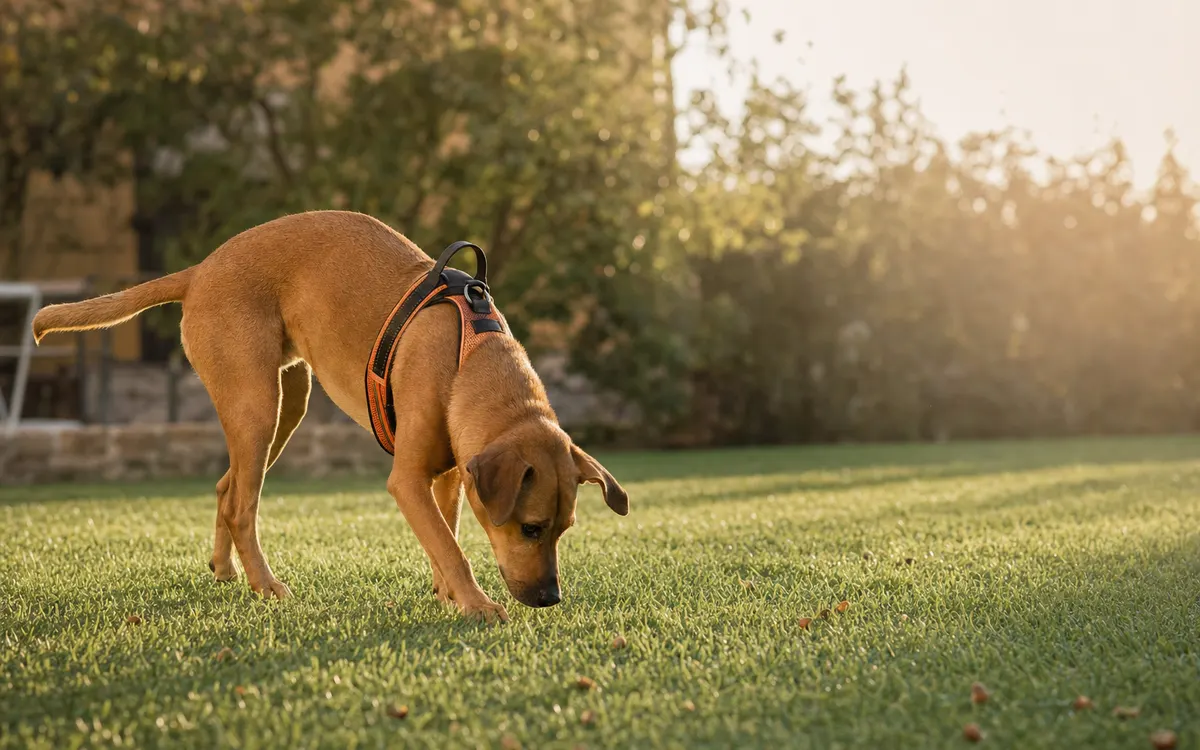
Mental and scent work. Searching for hidden food, sniffing freely on the walk, solving a puzzle feeder, learning something new. It is enormously tiring and it lowers arousal instead of raising it. Twenty minutes of calm sniffing is worth, in real fatigue, considerably more walking than people assume.
The ideal mix for most family dogs is heavy on the first and third, light on the second.
By Age
Puppy, up to 12 to 18 Months
Here less is more, for a concrete reason: the growth plates in the long bones do not close until 12 months in small breeds and 18 or even 24 in giants. Subjecting them to repeated impact in that window is associated with later joint problems.
The usual guideline is 5 minutes of structured walking per month of age, once or twice a day. Three months, fifteen minutes. Six months, half an hour.
Important: that refers to walking we direct. Free play at home or in the garden, where the puppy runs, stops and lies down when it chooses, is a different thing and self-regulates. What to avoid is sustained running alongside a bike, repeated stairs, jumping down from height, and frisbee, which combines a jump with a twist.
And yes: a puppy needs socialisation and novelty more than kilometres. Seeing the world is more tiring than covering it.
Adult, 1 to 7 Years
This is the wide range, 30 minutes to 2 hours, and where breed takes over. More on that below.
As a general structure that works: two or three outings a day, one of them longer, with genuine unhurried sniffing time, plus two or three weekly sessions of something more demanding, physical or mental.
Senior, from 7 or 8 Years Depending on Size
The classic mistake is cutting frequency and keeping intensity at weekends. It should be the reverse: more outings, shorter, gentler.
An older dog with arthritis benefits from steady movement, because an immobile joint hurts more. What harms it is the spike: the three-hour Sunday walk after a week on the sofa.
Keep the sniffing. A dog that can no longer run still hugely enjoys hunting for food hidden in the grass, and it still tires it out.
By Breed Type
More than the specific breed, what matters is what it was selected for:
Herding breeds (border collie, Australian shepherd, malinois). The most misread group. They do not need to run more: they need work. A border collie given two hours of ball throwing a day turns into an obsessive, frustrated athlete. What balances it is having tasks, learning sequences, solving problems. Without that, more physical exercise makes the picture worse.
Gundogs and retrievers (labrador, golden, springer, pointer). Great endurance and a real love of scent work. Good candidates for search games, swimming and long walks. Watch weight in labradors, which multiplies joint wear.
Terriers. Energy in short intense bursts, a strong urge to dig and chase. They do well with short varied sessions and games where they can legitimately use their mouth and paws.
Sighthounds (greyhound, whippet). The biggest misunderstanding of all. They are sprinters, not distance runners. They need a short free run in a safe area and, the rest of the day, they are extraordinarily calm dogs that sleep eighteen hours. A greyhound does not need two hours of walking a day.
Mastiff types and flat-faced breeds (bulldog, pug, boxer). Moderate exercise, with breathing as the limit at all times. A short narrow airway stops them cooling efficiently by panting. Cool hours, gentle pace, and stop as soon as breathing gets noisy. In summer, heatstroke is a genuine risk even on a short walk.
Nordic breeds (husky, malamute). Enormous endurance and cold tolerance, poor heat tolerance. They genuinely need a lot of exercise, and they need it to have direction, because they are built to keep moving for hours.
Toy breeds. Less volume, but not zero. A Yorkshire or a chihuahua needs to get out, sniff and move; what it does not need is to cover ten kilometres on those legs.
Three Signs You Are Overdoing It
- Lameness or stiffness on standing up the day after a long outing.
- A dog that is more wired, not less, after weeks of increasing exercise. That almost always means too much high-arousal activity and not enough calm.
- Obsession. The dog that cannot stop staring at the ball, that whines if you do not throw it, that never settles at home. That is not surplus energy, it is a behaviour that has become compulsive and that exercise feeds.
And the Signs It Is Not Enough
Damage at home, persistent barking, trouble settling at night, frantic greetings, pulling on the lead harder than usual. Here it is right to increase, but increase sniffing and mental work first, and kilometres only after that.
A Practical Rule That Works
Before asking how many minutes, ask what your dog needs to tire. If it comes home with a full head and a moved body, twenty well-designed minutes beat an hour of running. And if you only have one change to try this week, make it this one: let it sniff whatever it wants for ten uninterrupted minutes, without pulling the lead. You will notice the difference that same evening.
For any lameness, disproportionate tiredness or breathing that does not settle within a few minutes, see the vet before adjusting the routine any further.